Phidata
Framework for building autonomous AI assistants with long-term memory and tool use capabilities.
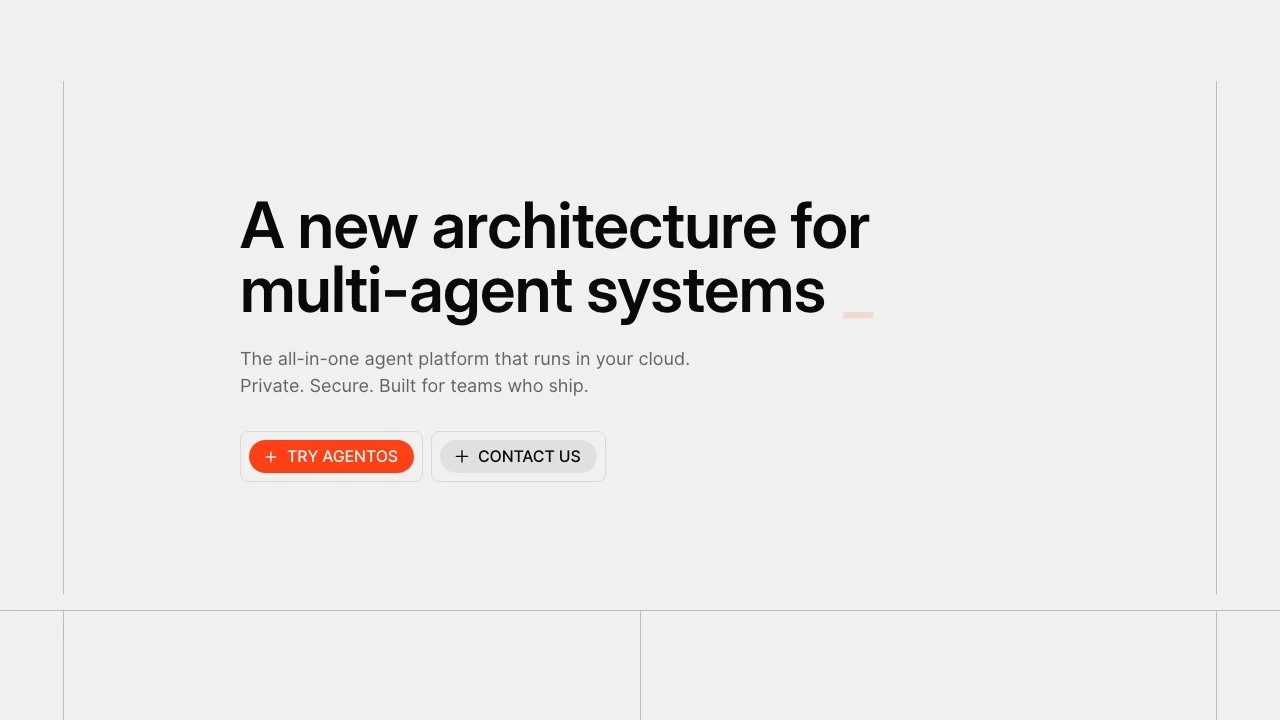
Phidata, now rebranded as Agno, is an open-source Python framework for building autonomous AI agents with memory, knowledge, and tool use capabilities. Originally known for making it straightforward to wire up LLM-powered assistants, the project has since evolved into a full-stack agent platform that includes a production runtime (AgentOS), a built-in control plane, and security features designed for team deployments.
At its core, Agno lets developers define agents in a small amount of Python code, attach tools, connect to databases for long-term memory, and compose multiple agents into coordinated teams. The framework is model-agnostic — it works with any LLM provider — and database-agnostic, so teams are not locked into a specific storage backend. Agents can run synchronously or asynchronously with a unified API, which the project claims reduces the usual friction of async Python programming.
The platform has three main layers. The agent framework handles the building blocks: agents, tools, knowledge retrieval, and memory. AgentOS is the production runtime that wraps those building blocks into a scalable, deployable API, handling multi-agent orchestration as infrastructure rather than as glued-together scripts. The control plane, accessible from the browser, provides chat interfaces, tracing, and monitoring without requiring data to leave the deployment environment.
Security is positioned as a first-class concern rather than an afterthought. The architecture includes JWT authentication, role-based access control (RBAC), and request-level isolation out of the box, which makes Agno more suitable than many competing frameworks for organizations with compliance or data residency requirements.
In the broader ecosystem, Agno competes directly with LangChain/LangGraph, CrewAI, and AutoGen. Community feedback consistently positions it as faster to get started with and better engineered than LangGraph, with less ceremony and more intuitive abstractions. For teams that found LangGraph's graph-based model too verbose or CrewAI too opinionated, Agno offers a middle ground: flexibility without boilerplate. The tradeoff is that LangChain has a larger ecosystem of integrations built up over a longer period.
The framework is especially well-regarded for its memory and knowledge system, which allows agents to retain context across sessions and ground responses in private data sources. This makes it practical for building production assistants — customer support bots, internal knowledge agents, data analysis pipelines — rather than just demos.
Agno is self-hosted by default, meaning agent data stays in the deploying team's own infrastructure. This is a meaningful differentiator for enterprise users wary of sending sensitive data to third-party SaaS platforms.
Key Features
- Open-source Python framework for building agents with memory, knowledge retrieval, and tool use
- Model-agnostic and database-agnostic: works with any LLM provider and storage backend
- AgentOS production runtime for deploying agents, teams, and workflows as a scalable API
- Built-in control plane for chat, tracing, and monitoring directly from the browser
- Multi-agent team orchestration with support for complex, coordinated workflows
- Unified sync and async API with minimal code differences between the two modes
- JWT, RBAC, and request-level isolation for enterprise-grade security
- Self-hosted architecture that keeps all data within the deploying team's own infrastructure
Pros & Cons
Pros
- Minimal boilerplate — agents can be running in minutes with a few lines of Python
- Full stack solution covering framework, runtime, and monitoring in one platform
- Strong memory and knowledge system suitable for production use cases, not just prototyping
- Security and privacy built into the architecture rather than added later
- Active community and fast iteration pace, with regular changelog updates
Cons
- Rebranding from Phidata to Agno means older tutorials and community resources reference the old name
- Self-hosting the full stack (AgentOS + control plane) requires operational overhead that pure-framework alternatives avoid
- Smaller ecosystem of third-party integrations compared to LangChain, which has had more time to accumulate connectors
- As a newer platform, long-term stability and API surface are less proven than established alternatives
Pricing
Visit the official website for current pricing details.
Who Is This For?
Agno is best suited for Python developers and engineering teams building production AI agents that need persistent memory, multi-agent coordination, and the ability to run securely within their own infrastructure. It is a strong fit for organizations that tried LangGraph or CrewAI and found them too complex or too slow, and for use cases where data privacy prevents sending information to third-party SaaS platforms.
Tags:

Similar to Phidata